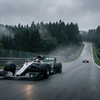
Lewis Hamilton is gone. Seven world titles, a decade of dominance, a seat that became a symbol. Toto Wolff could have recruited a veteran to fill the gap. He chose to do the opposite: bet everything on an 18-year-old. A new era is opening in Formula 1 — explore our exclusive F1 collection and be part of it.
In the history of Formula 1, some transfers make waves. Others reshape an entire era. Lewis Hamilton's departure to Ferrari belongs to the second category. Seven-time world champion, architect of the Silver Arrows' dominance, he leaves behind a void at Mercedes that goes far beyond any question of on-track performance.
The real question the paddock is asking is not who Hamilton was: everyone already knows. The real question is who comes next. And Toto Wolff's answer caught everyone off guard: Andrea Kimi Antonelli, born in Bologna, a future champion in the making, now the holder of the most history-laden seat on the entire grid.
7
Hamilton's World Titles
0
F3 Seasons: jumped straight to F2
Toto Wolff's Gamble: Building the Future Rather Than Patching the Present
After Hamilton's departure was announced, names circulated fast. Fernando Alonso, experienced like no one else, hungry for victories. Carlos Sainz, released from Ferrari, courted from all sides. Two safe options, two predictable options, and two options that Toto Wolff deliberately ruled out.
The Mercedes boss chose not to play it safe. He chose to play it long. By promoting Antonelli, he is not looking to fill a void: he is looking to build a decade. The logic is cold, strategic, almost brutal in its clarity. Champions are built. They are not bought.
A Meteoric Rise: When You Skip the Steps
What is striking about Antonelli's trajectory is his rate of ascent. F3? He skipped it entirely. Promoted directly to F2, he bypassed stages that most young drivers consider mandatory. It is precisely this kind of progression, vertical and exceptional, that caught Mercedes' eye very early in his career.
Mercedes is not looking for a transitional driver. It is looking for the face of its next decade. Wolff watched Red Bull nurture Verstappen from the sidelines. This time, he was not going to let his talent slip away.
— Strategic analysis, Tourismo Clothing Editorial
Why Now: The Logic of a Rebuilding Cycle
This choice must be understood in its sporting context. Mercedes is coming out of a turbulent period, seasons where the W-car failed to deliver the expected performance. In that context, recruiting a veteran would have been a signal of present management. Betting on Antonelli sends a radically different message: the rebuild is underway, and it is built to last.
The Weight of Seat #44: Carrying a Legacy Without Being Crushed by It
The number 44. Over eighteen years at Mercedes, Lewis Hamilton turned it into far more than a race number: he made it an icon, a generational marker. The question running through the entire paddock is as simple as it is dizzying: how can a teenager step into that immense shadow without disappearing into it?
Private Tests and an Almost Paternal Mentorship
Mercedes did not throw Antonelli into the deep end without a safety net. The promotion was built methodically, through private testing sessions on the team's former cars, including the W13. The goal: to let him understand the physical and technical demands of a Mercedes Formula 1 car before ever putting its wheels into competitive action.
The level of support has been described internally as almost paternal. Toto Wolff himself is said to have taken the young Italian under his wing, acting as a mentor as much as a team principal. This kind of close involvement reflects both the organisation's confidence in their protégé and a sharp awareness of the risks involved in exposing someone so young to this level of pressure.
What F1 Pressure Does to Young Drivers
Formula 1 is a mental sport as much as a physical one. Engineers, telemetry, media, thousands of cameras: everything converges on the cockpit. For an established driver, that is a controlled environment. For a teenager inheriting the seat of a seven-time world champion, the weight is of an entirely different nature.
What separates the drivers who survive that pressure from those it crushes is not raw speed alone. It is psychological maturity. And it is precisely there that Antonelli appears to have surprised those around him: a composure, a consistency under pressure, already documented by his performances in junior categories.
- Testing on Mercedes F1 cars: progressive acclimatisation to real G-forces and aerodynamic downforce levels.
- Specific physical preparation: an F1 driver's body faces demands that no junior category can fully replicate.
- Immersion in the technical structure: understanding how a 1,000-engineer organisation works before driving for it.
- Direct mentoring from Toto Wolff: a level of involvement that goes well beyond the standard team principal relationship.
The Domino Effect: How One Decision Locked the Entire Market
In Formula 1, every transfer is a move on a chessboard. When one piece moves, a dozen others are forced to reposition. Confirming Antonelli at Mercedes did not just announce a name: it closed a door on a series of drivers who had been waiting for this opportunity for months.
The Silly Season, Locked Down
The silly season is that time of year when transfer rumours saturate the F1 media. Every summer, the paddock turns into a driver marketplace. And at the centre of the 2024-2025 window, there was only one seat that truly mattered: the one at Mercedes.
Alonso, Sainz and others were orbiting around that opportunity. When Wolff made his call, he did not simply recruit Antonelli. He ended a months-long diplomatic ballet and forced every other player in the market to accelerate their own repositioning.
What makes Antonelli's arrival so compelling for F1 fans is not just his raw talent. It is the narrative tension it generates: a teenager facing the legacy of a giant, a team in the middle of a rebuild, a market thrown into chaos. Formula 1 is a sport. It is also a human epic.
— Tourismo Clothing Editorial
The Verstappen Effect Mercedes Refused to Miss Again
The paddock now has a name for this kind of promotion. In 2015, Max Verstappen made his F1 debut at 17. Everyone cried scandal. The rest is history. Wolff, who had watched Red Bull nurture that talent from the stands, decided that this time Mercedes would not let its own Verstappen slip through the net. He appears to have kept that promise.
A New Era Has Already Begun
Lewis Hamilton is not just a champion who left. He is an era that closed. And Toto Wolff, by refusing to play it safe, is sending a clear message to the entire paddock: Mercedes is not managing its transition. It is choosing it.
Kimi Antonelli is not a replacement. He is the beginning of a project. A project built on the conviction that raw talent, supported with precision, can inherit an impossible legacy and surpass it. That kind of boldness, precision and long-term vision is exactly what separates great teams from the rest. Explore the full world of motorsport passion on Tourismo Clothing.
Seat #44 is waiting. And so is the paddock.
Frequently Asked Questions
Who is Andrea Kimi Antonelli?
Andrea Kimi Antonelli is a young Italian driver, born in Bologna, developed within the Mercedes academy. He climbed the junior category ladder at an exceptional pace, skipping F3 to go directly to F2, and was chosen by Toto Wolff to succeed Lewis Hamilton at Mercedes in Formula 1.
Why did Mercedes choose Antonelli over an experienced driver?
Toto Wolff prioritised a long-term strategy. Rather than recruiting a veteran like Alonso or Sainz, Mercedes chose to develop its own champion over time, mirroring what Red Bull achieved with Verstappen. The goal is to build the future, not manage the present.
What tests did Antonelli complete before his F1 debut?
Before taking his place on the grid, Antonelli completed several private testing sessions in former Mercedes F1 cars, including the W13. These sessions allowed him to acclimatise to real downforce levels, G-forces and the physical demands of Formula 1, under the close supervision of the team.
What impact did this decision have on the F1 transfer market?
By confirming Antonelli, Mercedes definitively closed what had been considered the most coveted seat on the market. This domino effect forced other teams and drivers to accelerate their own negotiations, reshuffling the cards across the entire grid.
Is Antonelli really the "new Verstappen"?
The comparison is tempting and widely discussed in the paddock: raw talent promoted very young, whose progression bypasses the usual steps. Verstappen was 17 for his debut. Antonelli enters the sport in a similar context. History will determine whether he confirms that trajectory, but Mercedes is clearly convinced he will.